Tradofire
apps.apple.com/us/app/tradofire/id6615085924 →A trading app that went from idea to App Store by vibing
WHAT IT SOLVES
Building a real trading app with charts, live data, and slick UI normally takes months of grinding
WHY IT'S INTERESTING
It's not a 'hello world', it's a full app with complex charts
The author's screenshots show candlestick charts, depth charts, live order books. This isn't a toy—it looks like real trading software
Built with 'Vibe Coding' instead of traditional dev
The author explicitly said this was 'vibe coded'—likely using AI tools (like Cursor) with natural language prompts to generate and modify code. It's an experiment in changing the dev workflow
「I vibe coded a complex trading app」
TECH GUESS
Built with Cursor or similar AI coding assistant (like Copilot Workspace), likely using SwiftUI
DEEP DIVE
More Than a Chat Box: A "Vibe Coding" Experiment for a Full-Fledged Trading App
On HN, user sumeruchat posted his creation, Tradofire, titled "Show HN: I vibe coded a complex trading app," receiving 9 points and 8 comments. The title itself is a manifesto: a complex trading app involving real-time data and candlestick charts was developed via "Vibe Coding"—generating and modifying code through natural language conversation, likely with Cursor, rather than traditional line-by-line programming. The author clarified in the discussion: "I use some V0 for react components but this was just built with cursor and manual copy pasting." This statement reveals the current reality of AI-assisted development: it's not a fully automated magic trick, but a hybrid process of iterative interaction, stitching, and debugging between a human and AI tools. The goal isn't "zero code," but replacing most of the underlying coding labor with dialogue.
What Real Pain Point Does It Solve?
Traditionally, developing a trading app with professional charts (candlestick, depth) and a live order book involves immense front-end complexity, typically taking months. Tradofire directly targets this pain point. From the screenshots the author shared, it presents a UI that looks like a legitimate trading software. More crucially, it's not a static demo. When asked about data sources, the author replied: "Its doing technical analysis on coins from bybit and binance at the moment to give you those signals." This means the app connects to real exchange APIs and runs analytical logic. For an indie developer or small team, the full-chain complexity of implementing data fetching, processing, and visualization in the traditional way is daunting. Tradofire proves that, with AI coding tools, a solo developer has the capability to bring an app of this caliber from concept to reality.
Interesting Community Feedback: Tinder for Crypto?
The community's reaction was revealing. User ak352's comment hit the mark: "Hmm, tinder for crypto. Interesting take on trading UI." This suggests Tradofire may employ a minimalist, swipe-based decision model in its interaction design, contrasting sharply with the parameter-dense dashboards of traditional trading software. The author's reply, "There should be a tinder for everything!" also reveals a product instinct of an indie dev: in information-overloaded domains, use the most intuitive interaction to lower the decision-making barrier. This might be the deeper impact of AI programming—when the barrier to implementing complex features drops, developers can focus more on interaction innovation itself. User tedtimbrell's quip, "Like manifold I’m sure Ill be paper broke soon enough," subtly confirms the app's core gameplay: Paper Trading. This is a smart approach that mitigates legal risks while attracting users to experiment.
Who Is This For? What Are the Honest Limitations?
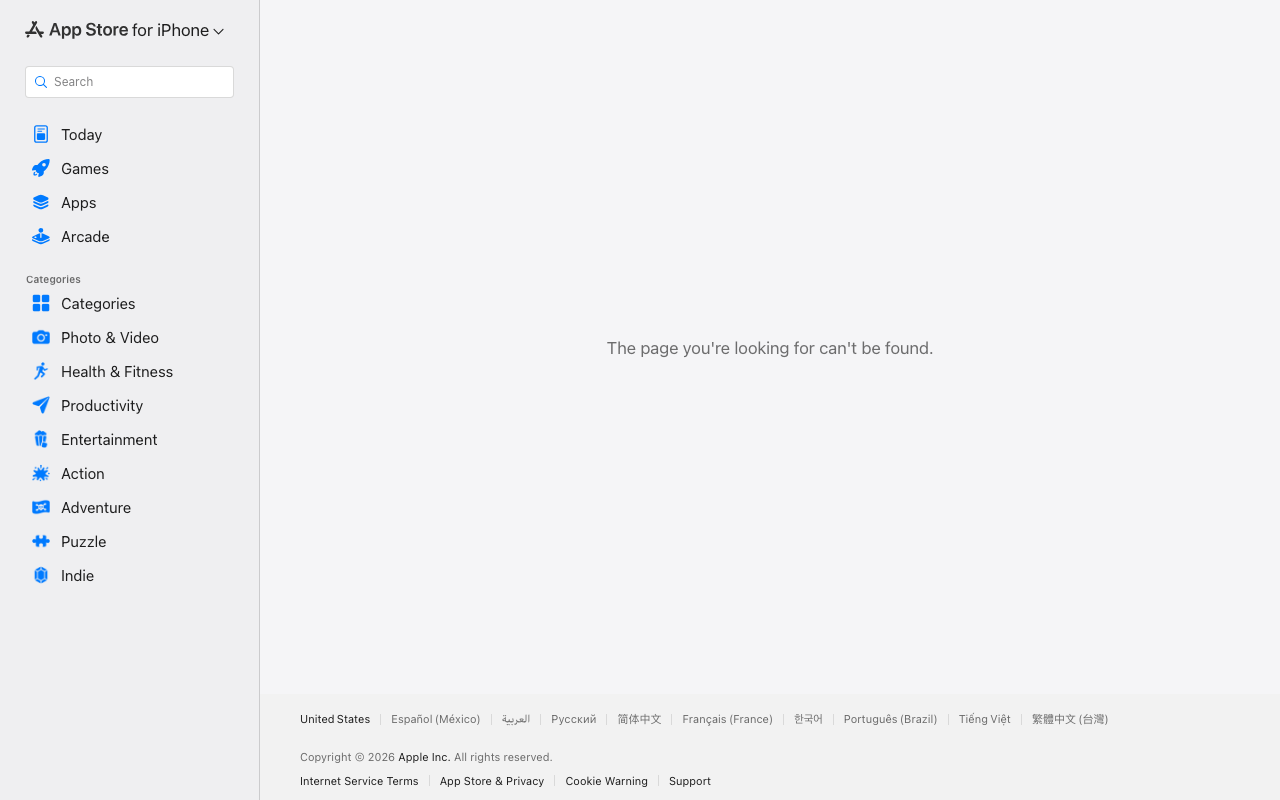
For indie developers and product managers, Tradofire is an excellent case study. It demonstrates how to use AI coding tools to rapidly validate a complex product idea that is heavy on front-end and data. You don't need to be an expert in SwiftUI or financial data visualization, but you do need to be able to clearly articulate what you want. However, one must see its limitations. First, the app has been delisted from the App Store (the material shows "The page you're looking for can't be found"), raising questions about its long-term availability. Second, the "manual copy pasting" construction approach suggests the codebase may lack systematic architecture, making maintenance and iteration (like adding new exchanges or chart types) prone to technical debt. Finally, trading apps involve funds and data security. Whether AI-generated code is robust enough in terms of security auditing, error handling, and performance optimization is a valid concern. It stands more as a powerful proof-of-concept (PoC) than a product ready for large-scale commercial operation.
Discussion (0)
- No comments yet — be the first.
Related
 #229▶ 136
Upload your textbook. AI teaches it back to you, chapter by chapter
 #228▶ 112
Someone needs to watch the AI spend meter
 #227▶ 184
Your users are kittens. Don't let them fall off the cliff